Video: Architect’s Table – Table Tronchin

Antique architect’s desk – known as a ‘Table à la Tronchin’
France
Mahogany
c. 1800
Dimensions: H x W x D: 79 x 98 x 60 cm, height adjustable from 79–118 cm
Description:
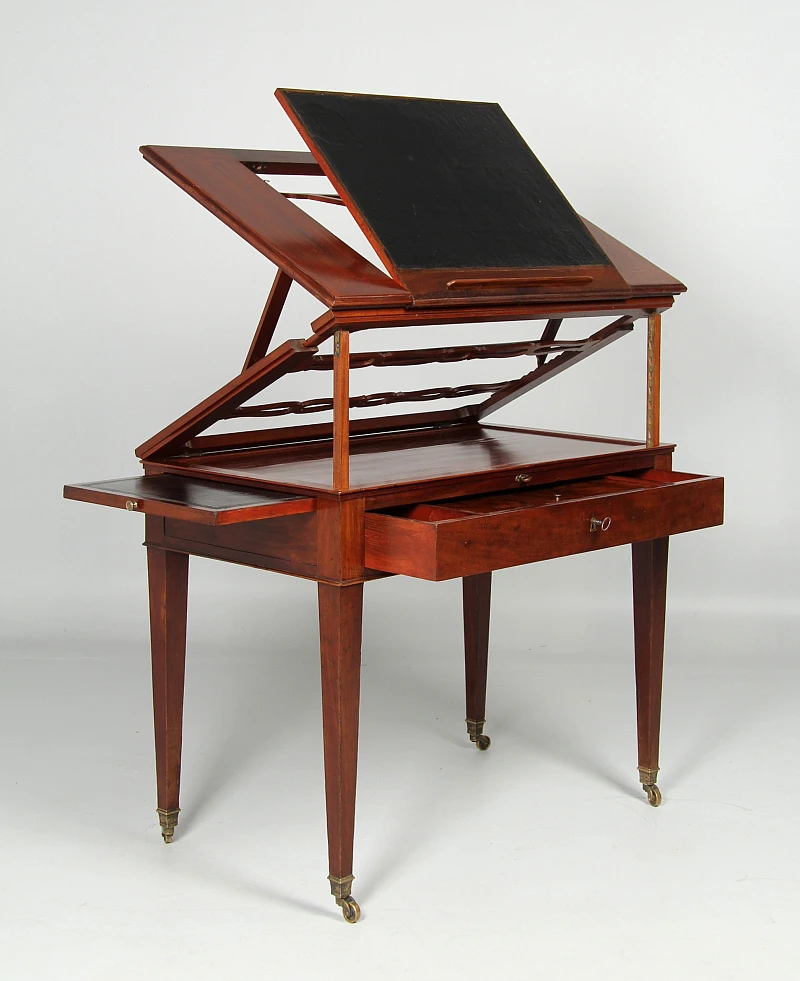
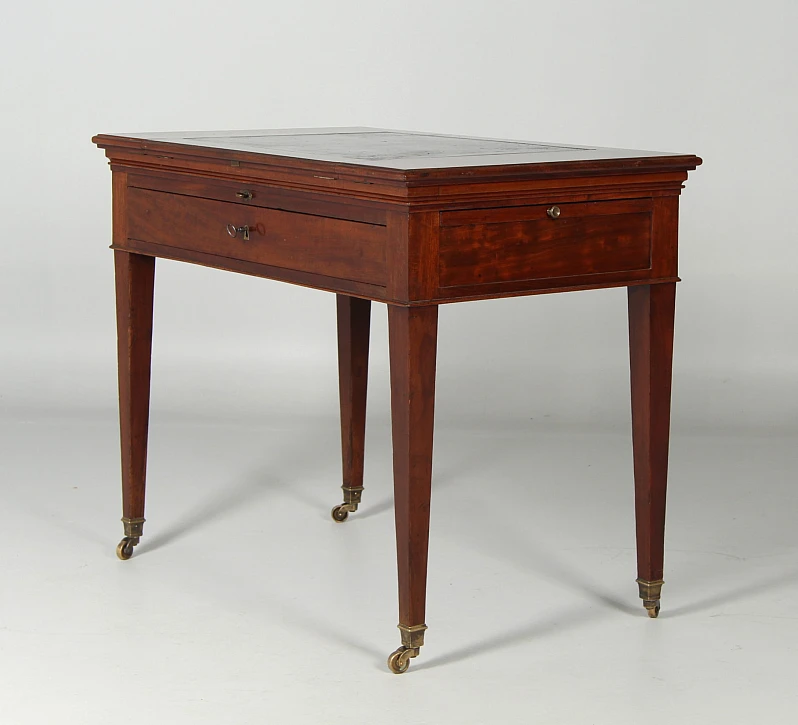
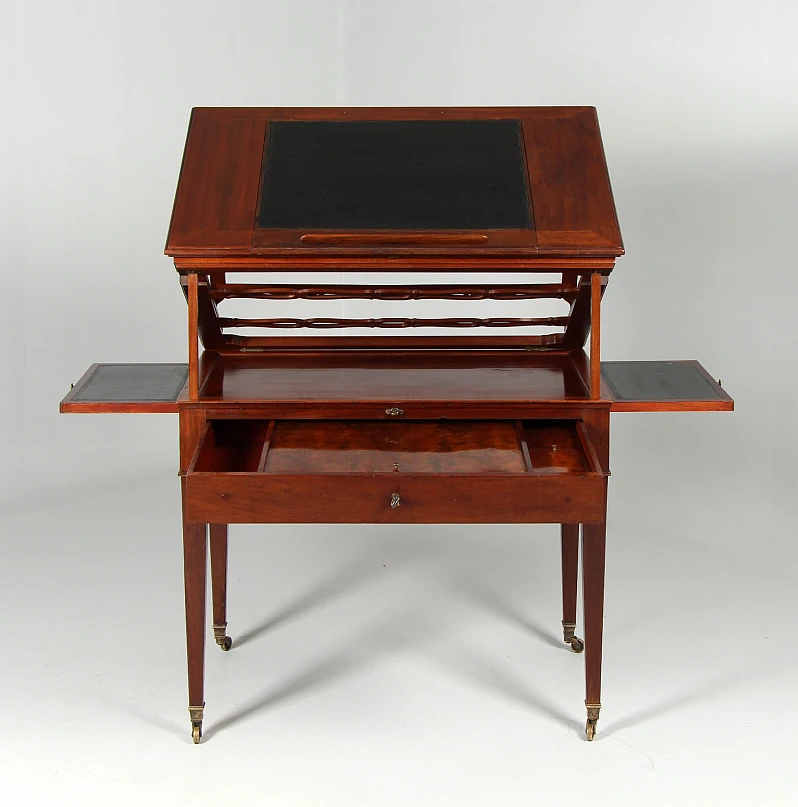
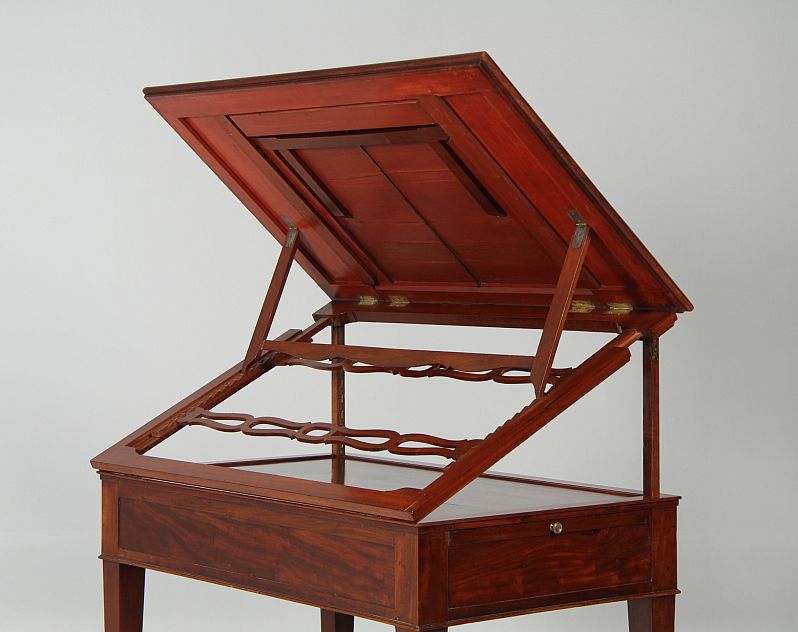
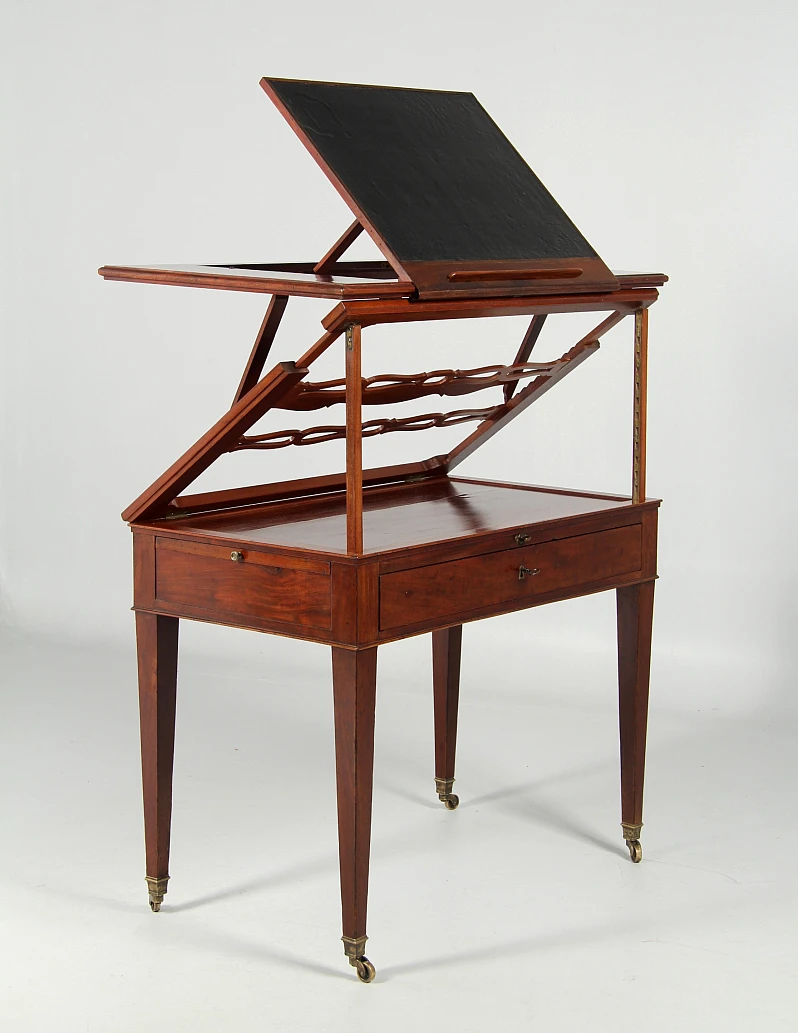
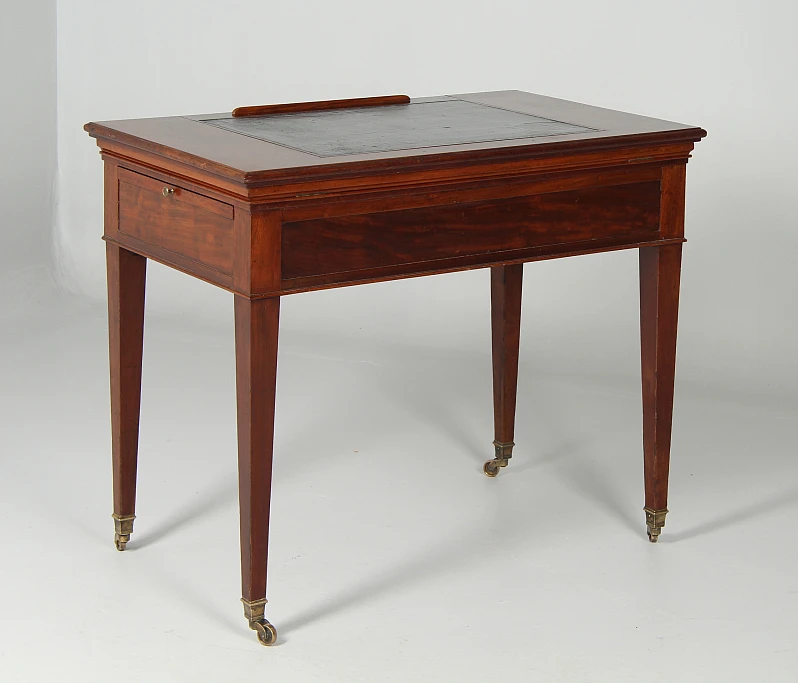
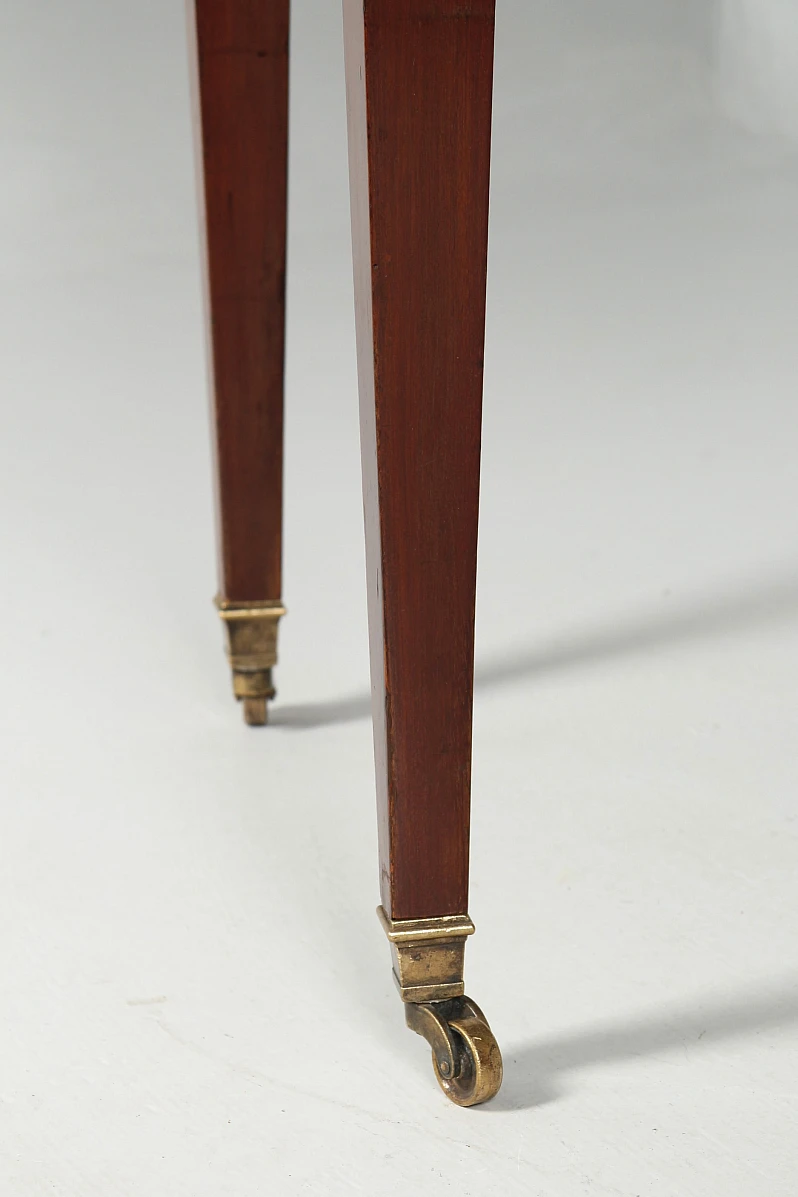
An architect’s or draughtsman’s desk standing on square legs that taper towards the bottom, fitted with brass castors. Known as a ‘Table à la Tronchin’.
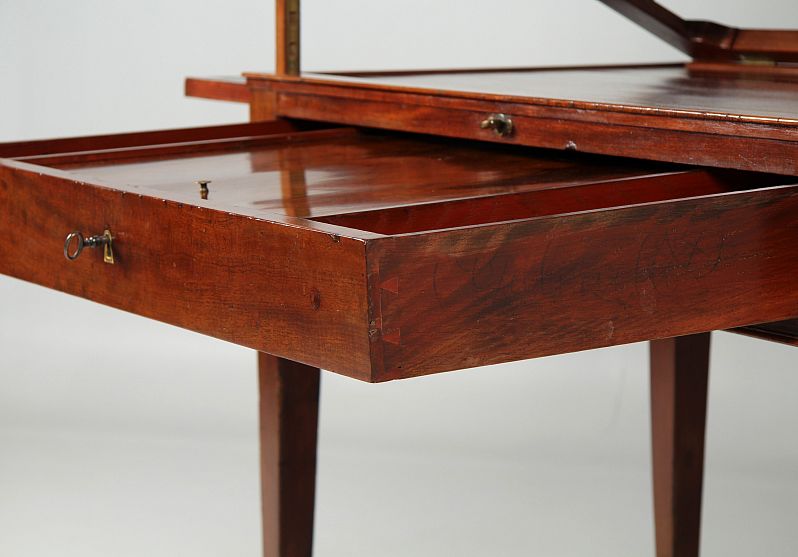
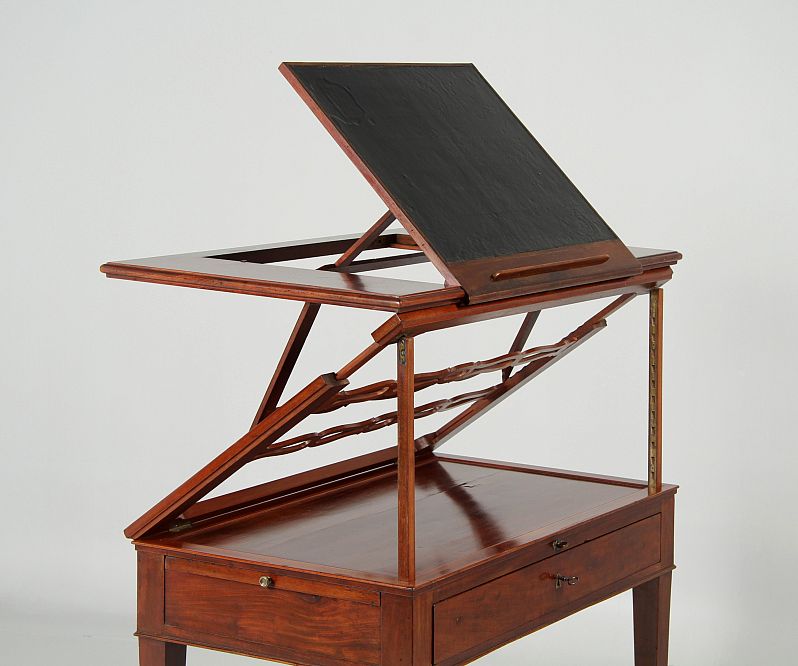
When folded, it forms a desk with a leather-upholstered top and a wide drawer in the frame. The drawer features compartments for storing drawing sheets, quills and other work utensils.
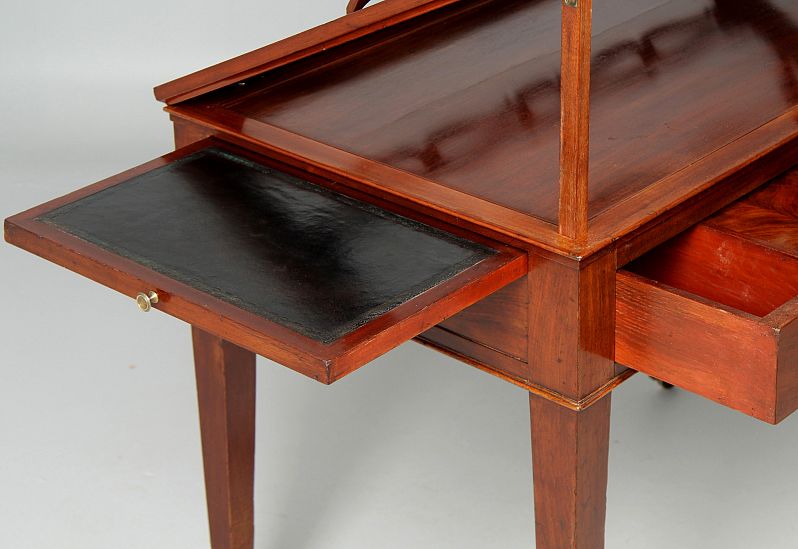
On either side there is a leather-covered pull-out tray, which would likely have been used to hold writing implements and/or candles.
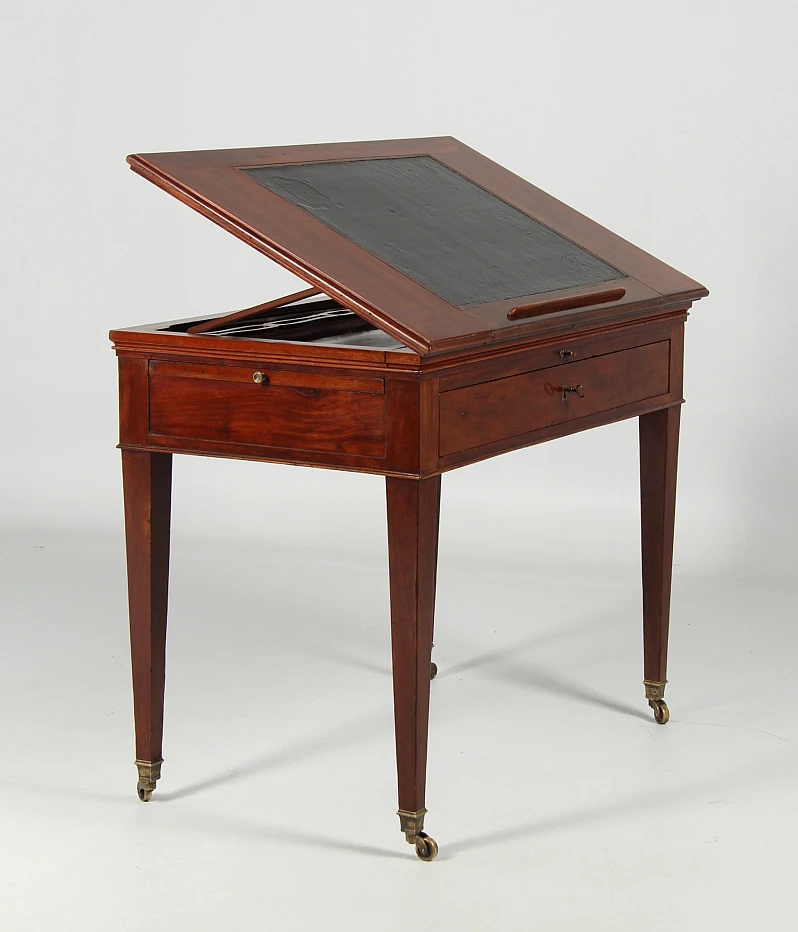
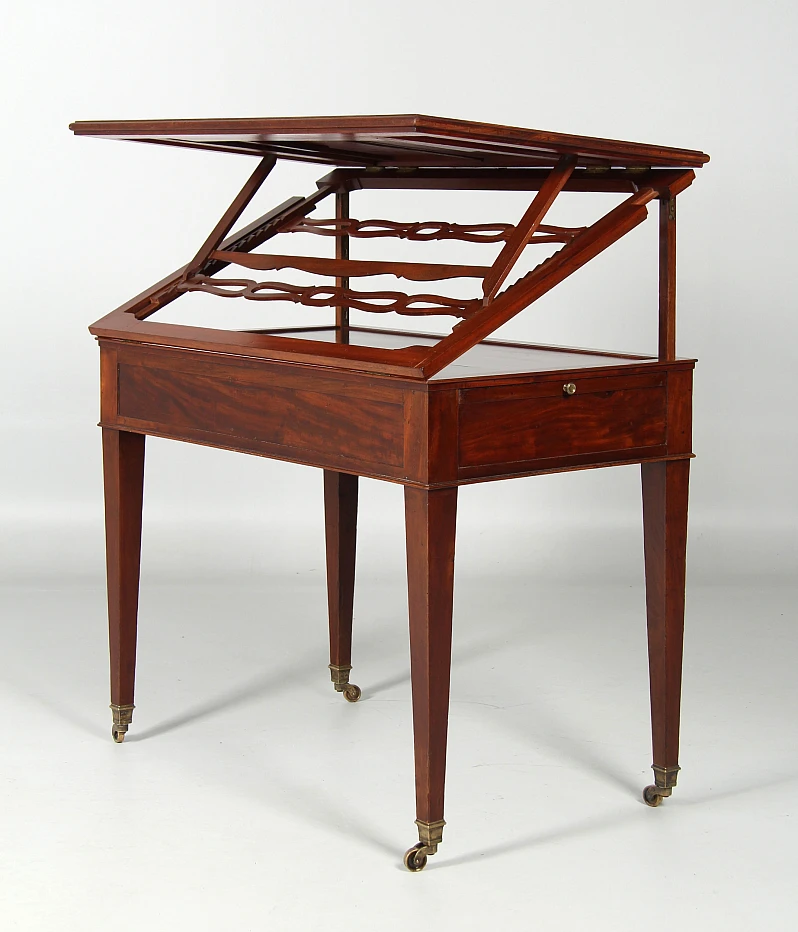
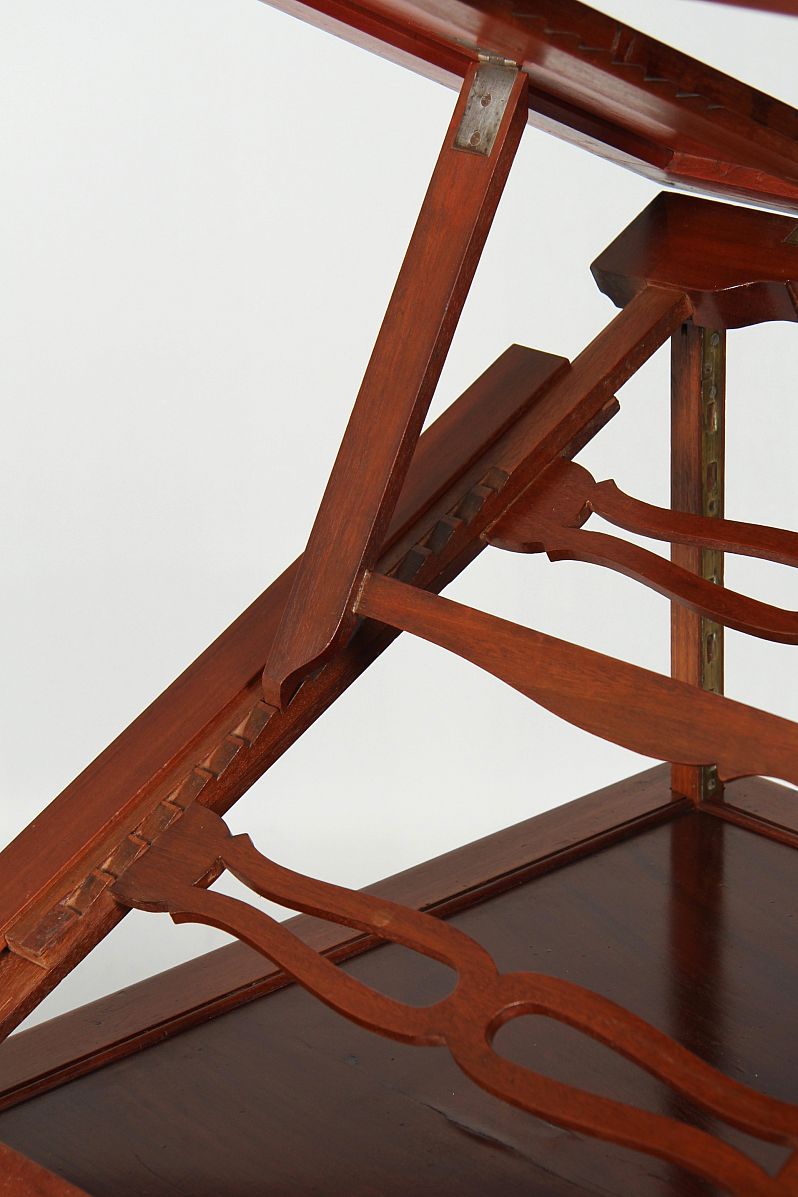
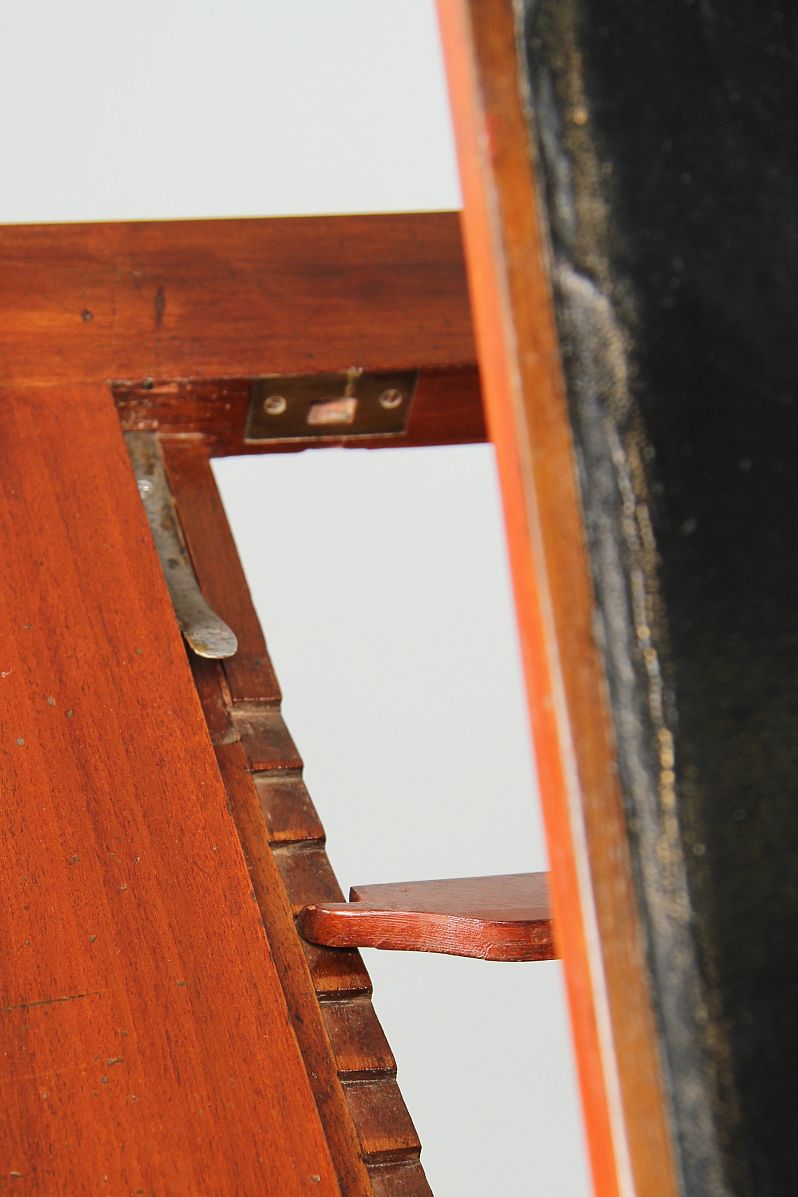
Thanks to an ingenious system, the top can be propped up at the rear or raised at the front. Of particular interest are the two supports, which were previously recessed within the front two legs and only become visible when the top is raised. The worktop can be locked at the desired height using two brass rack-and-pinion mechanisms.
This makes the table suitable for working whilst seated or standing.
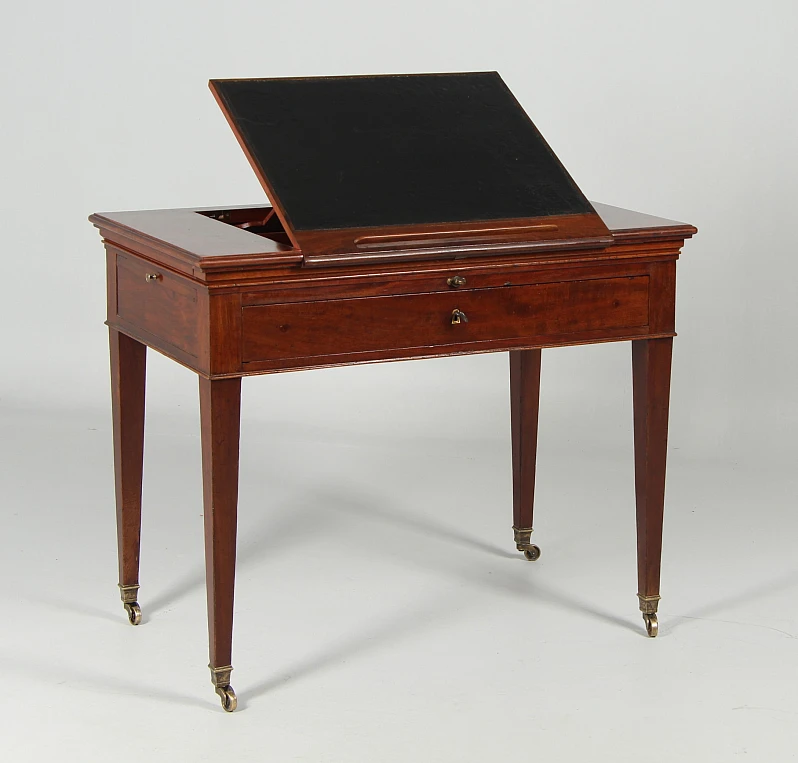
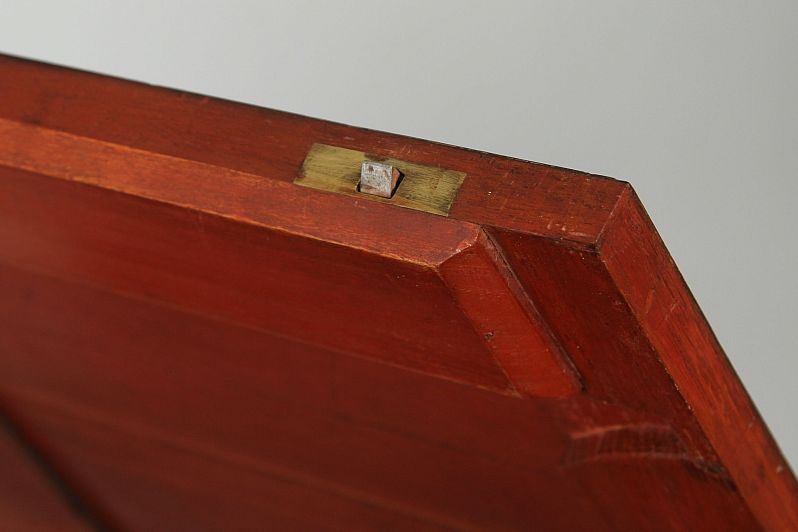
Another adjustment feature – and this is what sets this table apart from most similar designs – is the leather-upholstered work area on the main top. Secured by two latches and held in place by metal springs, this section of the top springs up at the touch of a button and its angle can be adjusted via a further rack and pinion mechanism.
The austere and classic design complements the overall technical impression of the piece of furniture well.
Interesting facts:
In the 18th century, there was a craze for furniture that concealed mechanisms and rack-and-pinion systems and showcased innovation in the cabinetmaking trade, such as the desk on offer here, the ‘Table à la Tronchin’.
The Parisian cabinetmaker Louis Dufour (master craftsman from 1764) is regarded as the inventor of this table; he ran his workshop on Rue Saint-Hyacinthe until the outbreak of the Revolution. He specialised in mechanical furniture and produced, amongst other things, armchairs for hospitals, chairs that could be converted into beds, and folding library ladders.
On 1 October 1777, Dufour placed the following advertisement in *Le Mercure de France*: “Dufour, master cabinetmaker and mechanic, has invented a table that can be raised and lowered by turning a simple crank. The entire mechanism is concealed within the table’s legs, leaving room for a drawer. This table is very convenient for asthmatics, who can write almost exclusively whilst standing”.
Nevertheless, this type of furniture was not named after its inventor, but after the Geneva-born doctor Théodore Tronchin (1709–1781), who at that time was conducting research into bone disorders that were often the result of architects’ poor posture at their work tables. He recommended to his patients a table with a sloping top that could be adjusted in height – depending on whether one wished to work standing up or sitting down.
Condition:
Restored and polished with shellac. All mechanisms function perfectly.
Price: €6,500
Please refer to the following specialist literature for further information:

Solange de Plas – Les meubles à Transformation et à Secret p. 67

Article found under: Tables
Add to shopping cartVideo: Architect’s Table – Table Tronchin
Also interesting
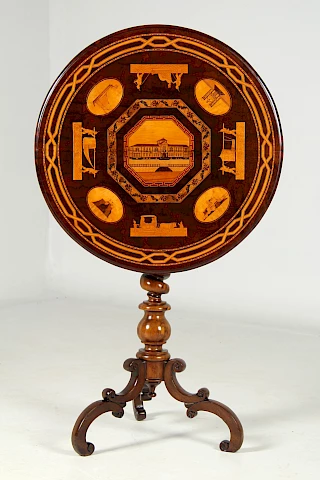
Antique decorative table with intricate marquetry
England
Rosewood, maple
Mid-19th century

Finely inlayed ladies' desk
Paris
Rosewood a.o.
around 1880
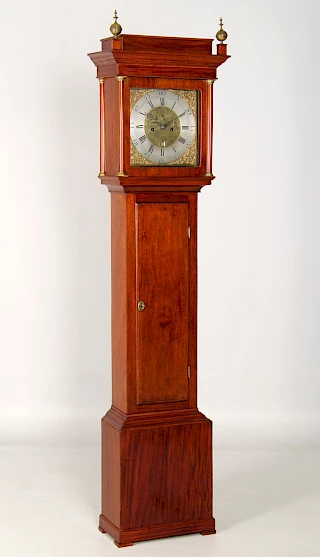
George III grandfather clock - James Pike
England (Newton Abbot)
Mahogany
circa 1790